
Laboratory System Decommissioning
Safe isolation and dismantling of contaminated hoods and ductwork.
Learn more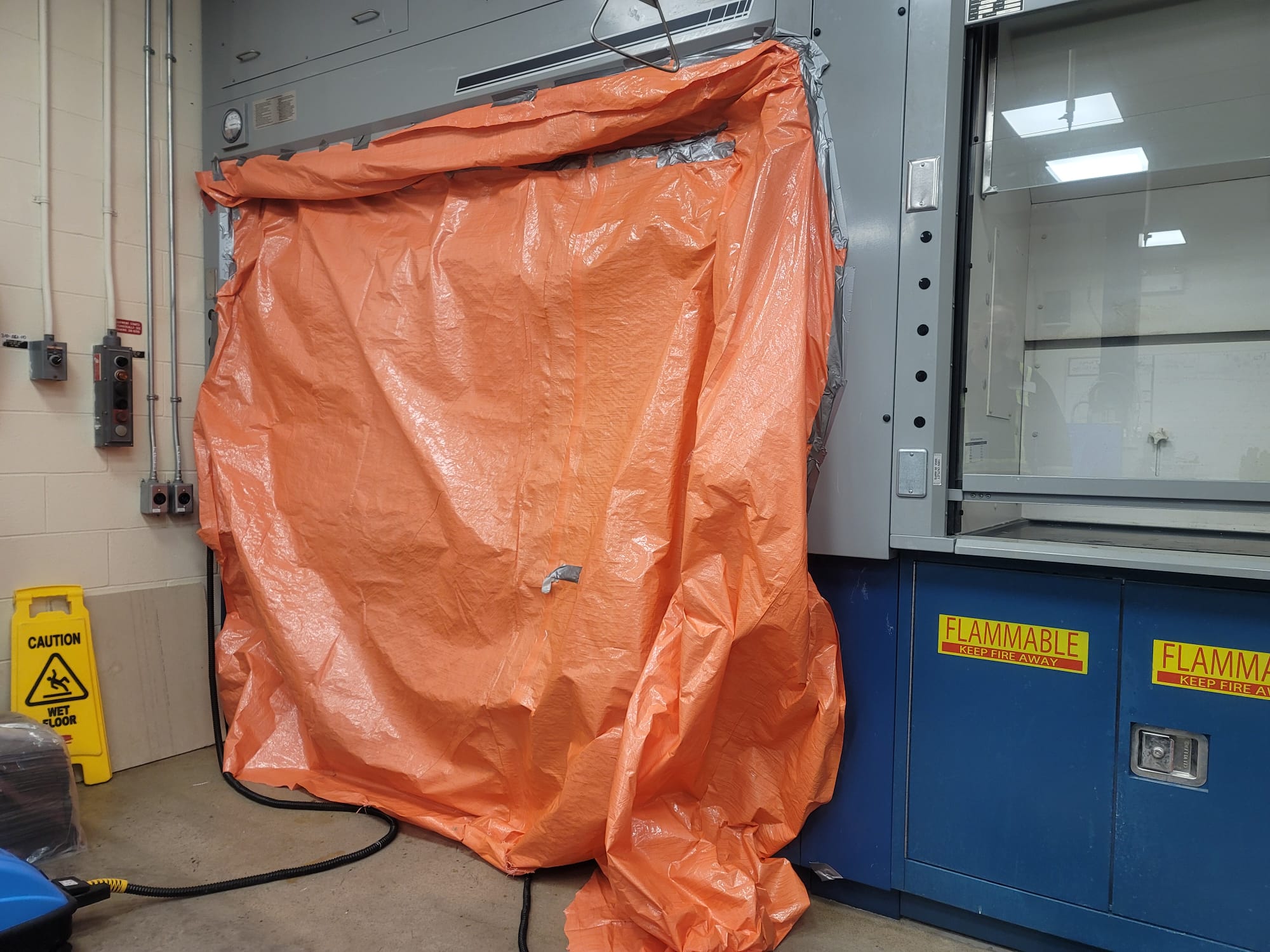
Closing a lab or renovating a wing changes the air for every hood around it, and old ductwork can hide contamination. We isolate and remove it safely, then rebalance the airflow so the whole room still works.
When a lab closes or a chemistry wing gets renovated, two things go wrong if you rush it. Old ducts can hold decades of chemical residue, and pulling one hood offline can starve the hoods next to it. We handle both, in the right order.
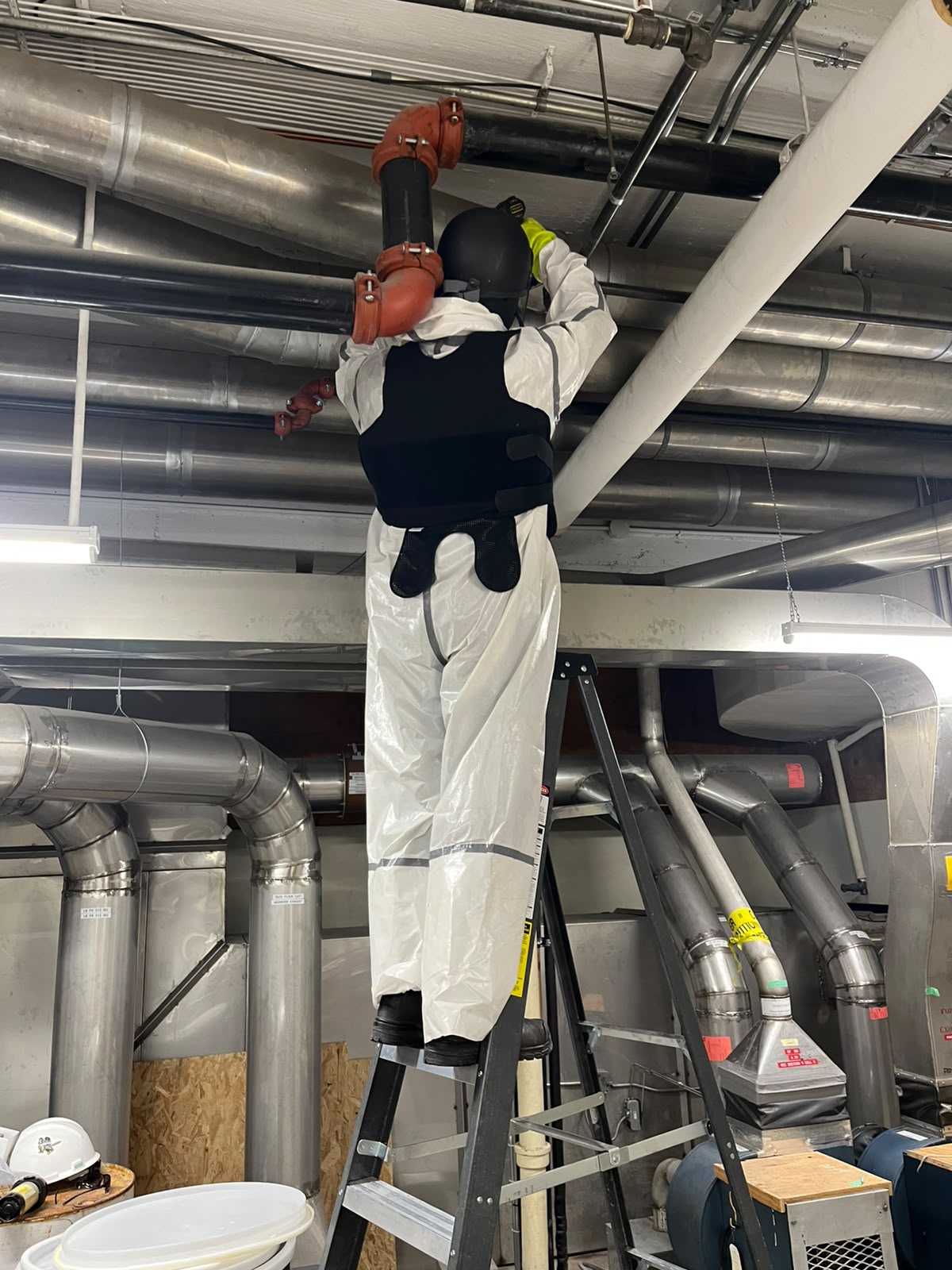
Laboratory decommissioning is the safe teardown of lab systems, hoods, ducts, and the airflow controls tied to them. Air balancing is the follow-up that makes sure the room still moves air the way it should once things change. Do one without the other and you end up with hoods that no longer contain, or a demolition crew cutting into a duct that should have been cleaned first.
Three services handle the full job, from safe removal to a room that breathes correctly again. Each has its own page.
Most projects start with system decommissioning, move into VAV and CAV air balancing once hoods are added or removed, and finish with airflow monitor calibration so the alarms on the wall tell the truth.
This is the part people skip, and it is the part that hurts someone. A perchloric acid hood can build shock-explosive crystals inside its ductwork. Old chemistry ducts can hold mercury and chemical residue. Before any dismantling, we test, and if we find something, we clean it first. That is where our perchloric acid decontamination and chemical and heavy-metal decontamination work ties in.
Every fume hood shares the building's exhaust and makeup air. Add a hood, remove one, or reroute a duct, and the pressure across the room shifts. A hood that used to contain can start pulling fumes back into the room. We rebalance VAV and CAV systems, sync the exhaust fans, and confirm each hood still holds its face velocity before we call the job done.
Older campus buildings at the University of Calgary and University of Alberta were not designed for today's exhaust loads, and cold-weather makeup air makes balancing trickier. We plan for both, so your rebalanced lab still works in the middle of an Alberta winter.
Often yes. If the hood handled perchloric acid, mercury, or heavy metals, the ductwork may hold residue that is dangerous to cut into. We test first and clean what we find, then give you a clearance report before anything is dismantled. It is the safe and the code-friendly way to do it.
It can. Fume hoods share the building's exhaust and makeup air, so taking one offline changes the pressure for the rest. After any change we rebalance the room and confirm each remaining hood still holds its airflow. That is the air balancing half of this service.
CAV means constant air volume, where the exhaust stays the same all the time. VAV means variable air volume, where the airflow changes with the sash or a sensor to save energy. They are balanced differently, and we work with both, including syncing the exhaust fans so the system stays stable.
Yes. Once the room is balanced, we calibrate the low-flow monitors and alarms so they read correctly and warn users at the right point. A miscalibrated alarm is worse than no alarm, because people trust it. See our airflow monitor calibration page.
Describe what is in your lab and we will tell you what testing or cleanup makes sense, with no obligation.
Book a Site Assessment