
Airflow Velocity Profiling
Face-velocity testing with a thermal anemometer grid to catch weak airflow.
Learn more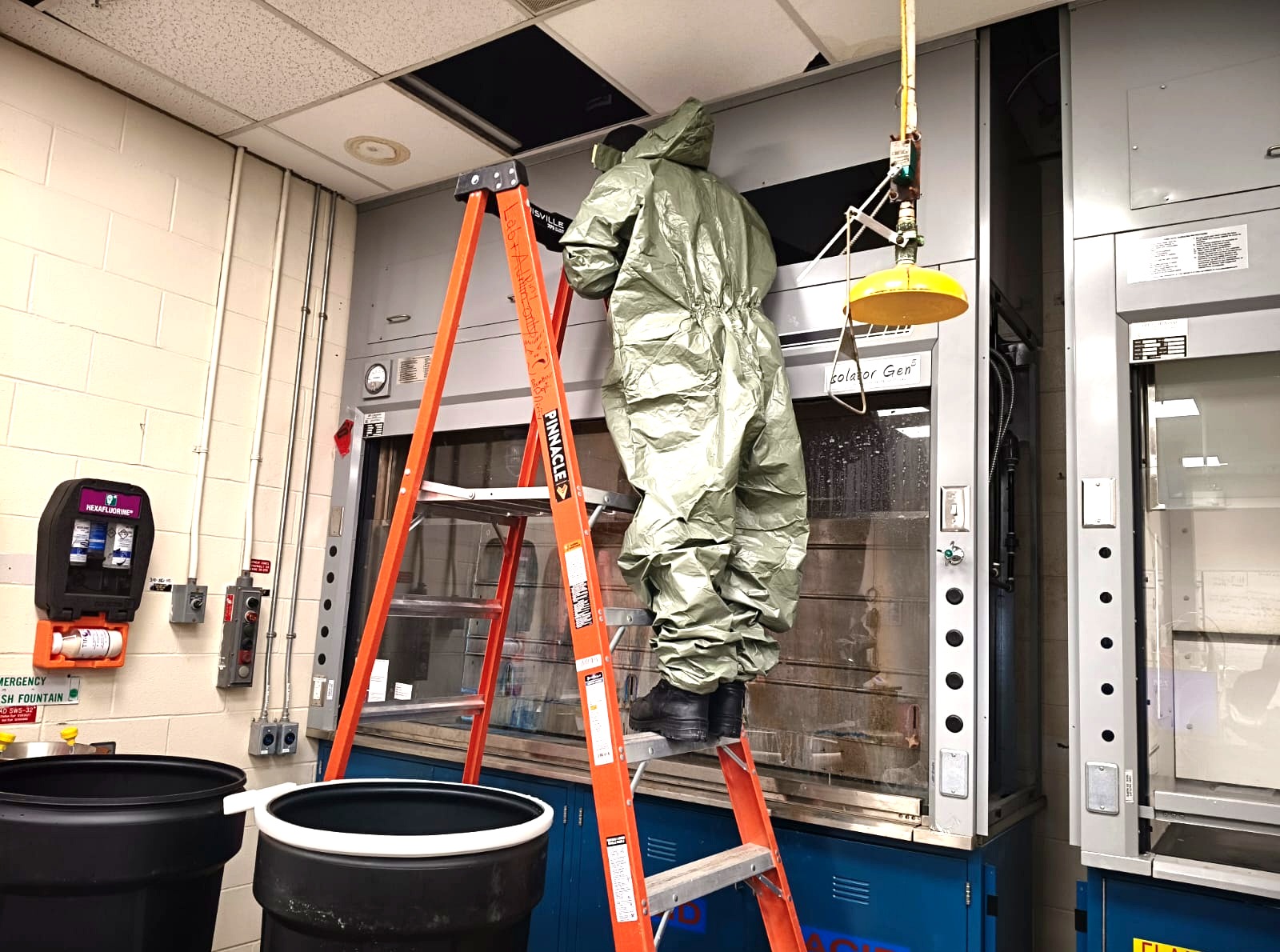
Numbers tell you the airflow speed. Smoke shows you what the air actually does. We release a visible smoke inside the hood and watch how it moves, so we can catch reverse airflow and dead spots a meter alone would miss.
You can measure face velocity all day and still not see the swirl of air that pushes fumes back at the worker. Smoke does. When we release a visible smoke inside a hood, the airflow stops being a number and becomes something you can watch, and problems that hide in the data show up right away.
Smoke visualization is a containment test that makes airflow visible. We introduce smoke at the hood face and inside the chamber and watch how it moves. Good airflow pulls it straight back and out. Bad airflow lets it curl forward, pool in a corner, or reverse toward the room.
We use small smoke sources to check specific spots and larger volumes to show the overall pattern across the whole hood face.
We trace where the air reverses or stalls, which points straight at the cause, whether it is the hood or the room's airflow balance.
Smoke visualization is part of a full annual certification and pairs naturally with face-velocity profiling and ASHRAE 110 testing. When the smoke shows a room-wide airflow problem, our air balancing team can rebalance it.
Face velocity measures how fast air moves into the hood. A smoke test shows how that air actually behaves. A hood can have a good velocity number and still let air curl back toward the worker, which only the smoke reveals. They work best together.
Reverse airflow is air moving out of the hood toward the person instead of away from them. It means fumes can reach the worker's breathing zone even if the meter looks fine. Catching it is one of the main reasons to run a smoke test.
Yes. We use controlled test smoke made for this purpose, in small amounts, and it clears quickly through the hood's own exhaust. It is a standard part of fume hood certification.
Yes. We document what the smoke showed as part of your certification report, including any reverse flow or dead spots we found and what likely caused them.
Describe what is in your lab and we will tell you what testing or cleanup makes sense, with no obligation.
Book a Site Assessment