
ASHRAE 110 Performance Testing
Tracer-gas containment testing, the gold standard for fume hood performance.
Learn more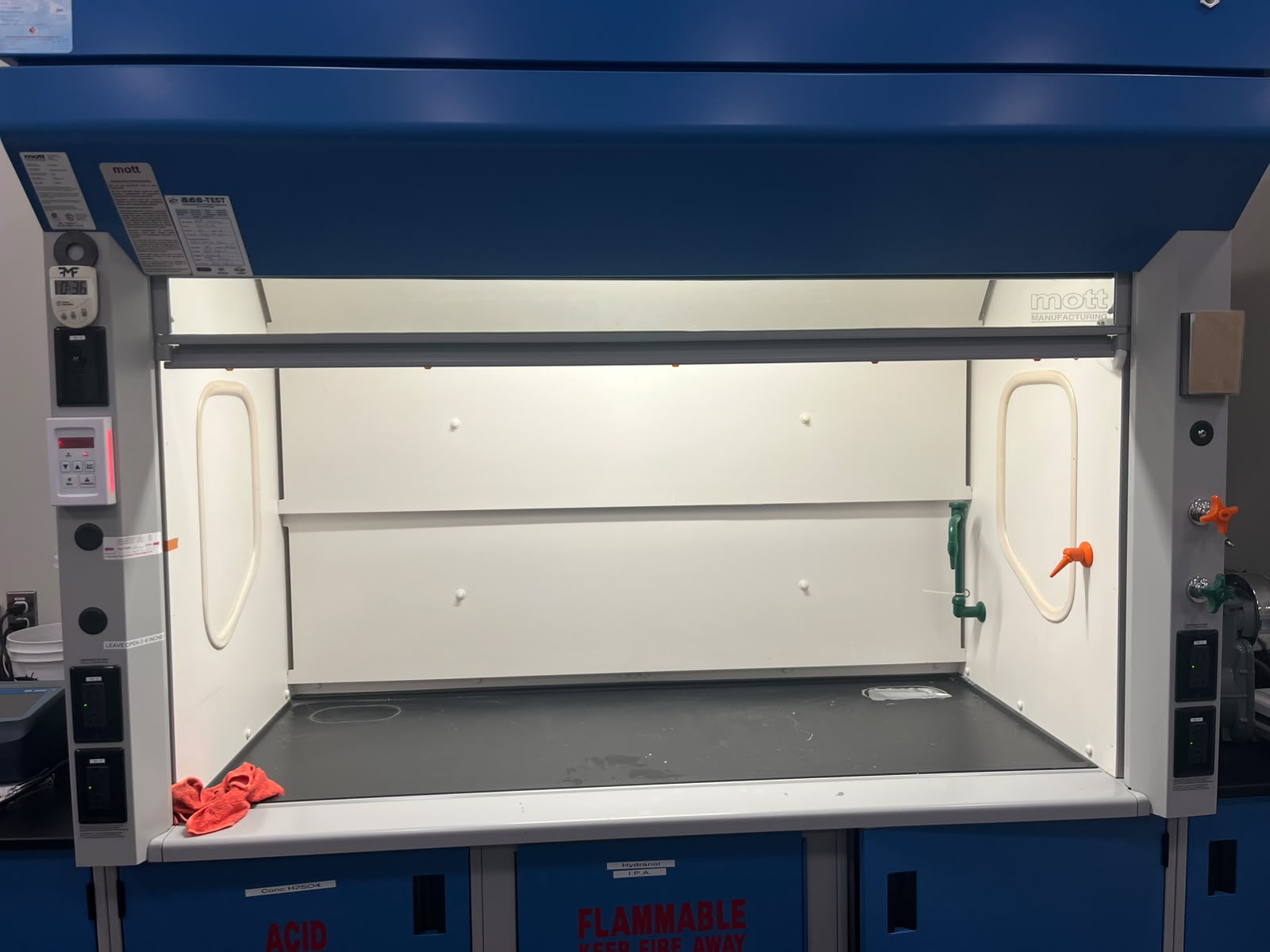
A fume hood only keeps the person in front of it safe when the air pulls the right way, every day. We test that airflow, prove it holds, and certify it, so your Alberta lab stays lined up with OSHA and ANSI/AIHA Z9.5.
Every fall, we get the same call from lab managers around Calgary and Edmonton: "Our hoods are due, can you certify them before the audit?" The honest answer is that certification is more than a sticker. It is proof that the hood pulls fumes away from the person using it, and that proof has to be renewed on a schedule.
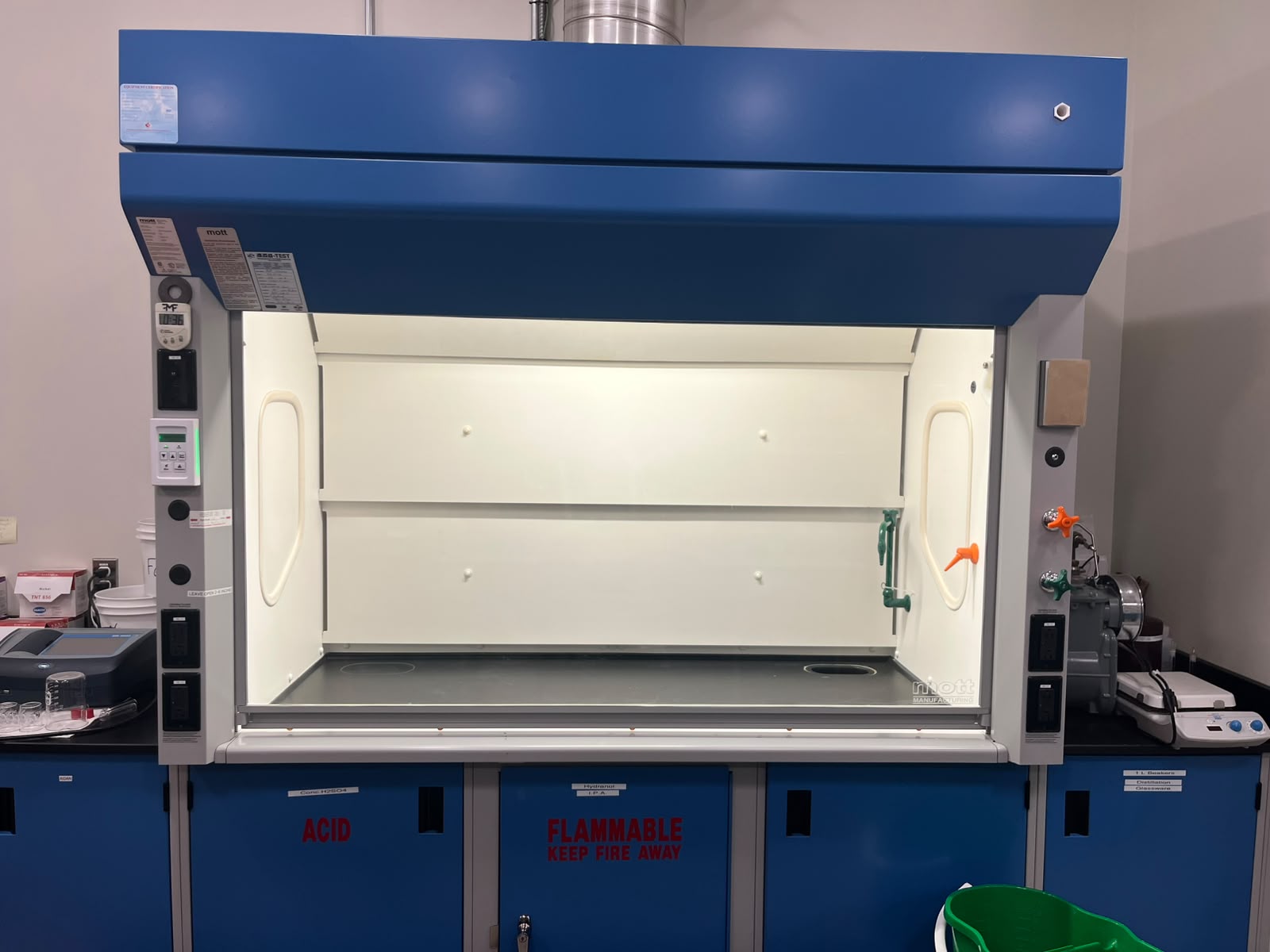
Fume hood certification is a set of tests that measure how well a hood contains what happens inside it. If the airflow is too low, fumes drift back into the room. If it is too high, it can pull vapors past the worker or waste a lot of energy. We check the numbers, watch how the air actually moves, and give you a report you can hand to your safety office.
We build the certification around four checks. Each one answers a different question, and together they tell you whether the hood is safe to use. You can read about any of them on its own page.
For most hoods, a yearly annual compliance certification that includes face-velocity profiling and a smoke visualization test is enough. For new installs, hoods that were moved, or high-hazard work, we add full ASHRAE 110 tracer-gas testing for hard numbers on containment.
The common rule is once a year. That yearly check keeps you compliant and gives auditors a clean paper trail. Some hoods need it more often:
A lot of companies test your hood, tell you it failed, and leave. We do not do that. When a hood does not pass, we tell you why in plain language, whether it is a worn baffle, a sash problem, a blower issue, or an airflow balance problem in the room. Then we help you fix it or point you to the right repair, and we come back to re-certify once it is sorted. If the root cause is airflow across the whole room, that is where our VAV and CAV air balancing work comes in.
Every certified hood gets a dated label and a written report with the test data behind it. That package is built to satisfy your environmental health and safety office, your insurer, and outside auditors. Multi-hood sites and whole campus buildings get a single schedule so nothing slips through the cracks.
Pricing depends on the hood type and how much testing it needs. A basic annual certification with face-velocity and smoke testing sits at the lower end, while full ASHRAE 110 tracer-gas testing costs more because of the equipment and time involved. Multi-hood sites get better per-hood pricing. Send us your hood count and we will give you a clear quote.
Most single hoods take 30 to 60 minutes, depending on the type and the level of testing. We schedule around your lab so we are not in the way of active work, and larger sites are booked as a block over one or more days.
We test to ASHRAE 110 for containment and follow OSHA and ANSI/AIHA Z9.5 for face velocity and general compliance. Your certification report names the standards it was tested against so auditors can see it at a glance.
We focus on chemical fume hoods for certification, and we decontaminate biosafety cabinets with VHP. If you need both certified and decontaminated, tell us and we will line up the right scope. See our biological hazard decontamination page.
Describe what is in your lab and we will tell you what testing or cleanup makes sense, with no obligation.
Book a Site Assessment