
VAV & CAV Air Balancing
Pressure balancing and exhaust fan sync so every hood still contains.
Learn more
The little monitor on the side of a hood is what tells a worker the airflow is safe. If it is out of calibration, it lies. We calibrate and repair low-flow monitors and alarms so they warn people at the right moment.
People trust the green light. When a fume hood monitor says the airflow is fine, the person in front of it believes it and keeps working. That is exactly why a miscalibrated monitor is so dangerous, it gives false comfort while fumes drift into the room.
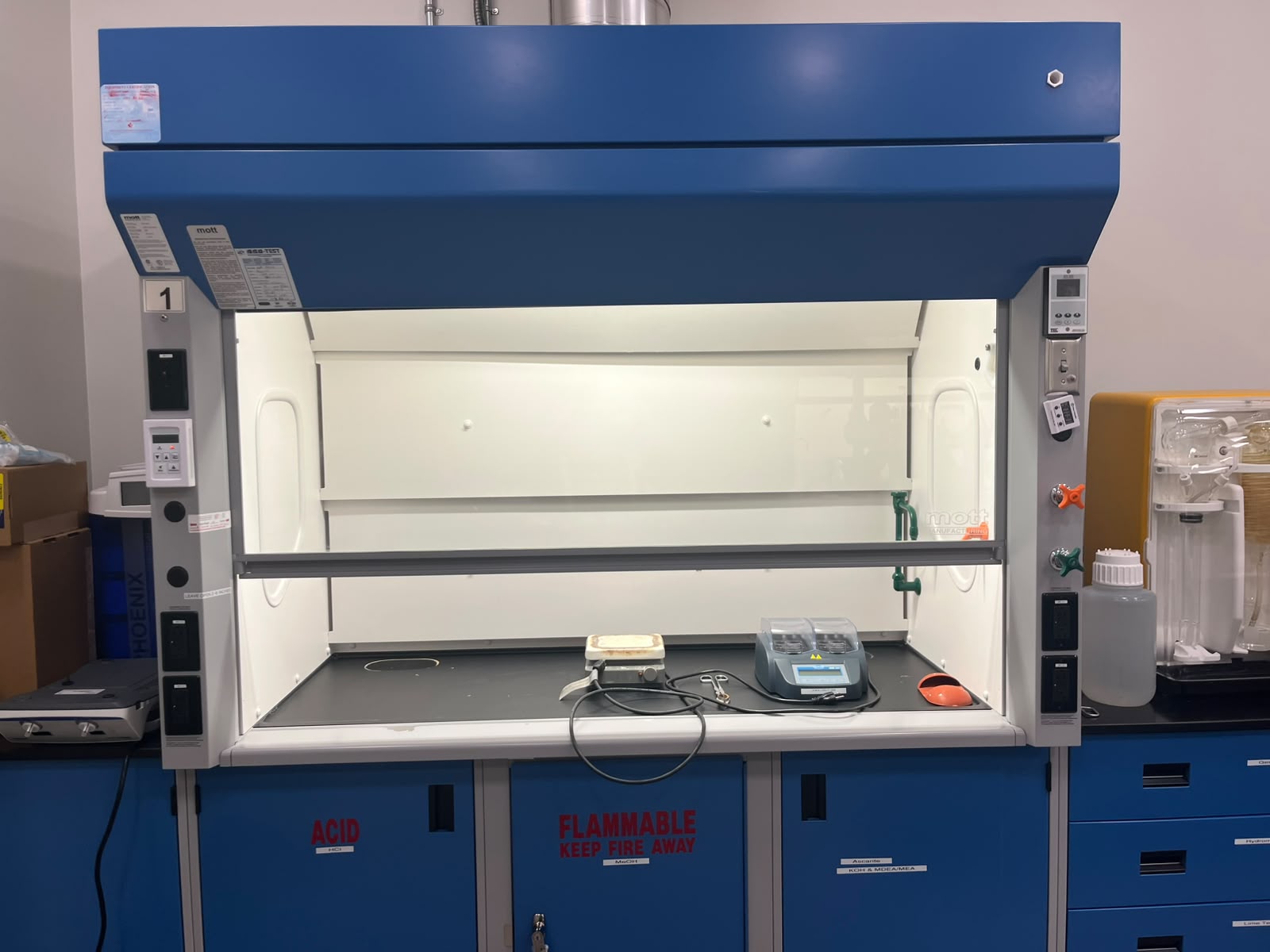
Airflow monitor calibration sets those monitors and alarms to read correctly and warn at the right point. We handle low-flow digital alarms, the sensors behind them, and the repairs when a unit has drifted or failed. The goal is simple: the alarm should tell the truth.
We compare the monitor's reading to the hood's actual measured airflow and adjust it so the two match, then set the alarm point where it should be.
If a sensor or unit has failed, we repair it or recommend a replacement, so you are not left with a monitor that cannot be trusted.
We test that the alarm actually triggers when airflow drops below the safe point, because a set point on paper is not the same as an alarm that sounds.
Calibration makes the most sense right after the room is balanced, so the monitor matches real conditions. It pairs with our VAV and CAV air balancing and is a natural add-on to annual certification, so the alarm and the airflow are checked together.
The clearest sign is a monitor that reads safe when the airflow is actually low, or one that alarms for no reason. Since you cannot see that from the outside, the safe move is to calibrate on a schedule, usually alongside annual certification.
Because people trust it. A monitor that shows safe when the hood is not containing gives workers false confidence, so they keep working while fumes escape. That is more dangerous than having no monitor at all.
Yes. If a sensor has drifted badly or a unit has failed, we repair it or recommend a replacement. Then we calibrate it to the hood's real airflow and confirm the alarm triggers at the right point.
After. Balancing sets the room's real airflow, and the monitor should be calibrated to match those real conditions. That is why we often do balancing and calibration together, then confirm the whole hood during certification.
Describe what is in your lab and we will tell you what testing or cleanup makes sense, with no obligation.
Book a Site Assessment